


Sometimes regular glasses get annoying. Contact lenses aren't always a solution either: they dry out your eyes, require care during the day, and some people simply find them uncomfortable. Then, at some point, a person learns that it's possible to... wear lenses at night and see perfectly fine during the day without any optical aids. It sounds almost like magic, but in ophthalmology, it's been a reality for a long time. Orthokeratology is a technology that has become truly popular in recent years among adults and, especially, children.
And although the topic sounds high-tech, its essence is very clear: soft nighttime vision correction that works painlessly, safely, and with excellent results when properly selected. Let's break down why these lenses have received such high recognition and who they are truly suitable for.
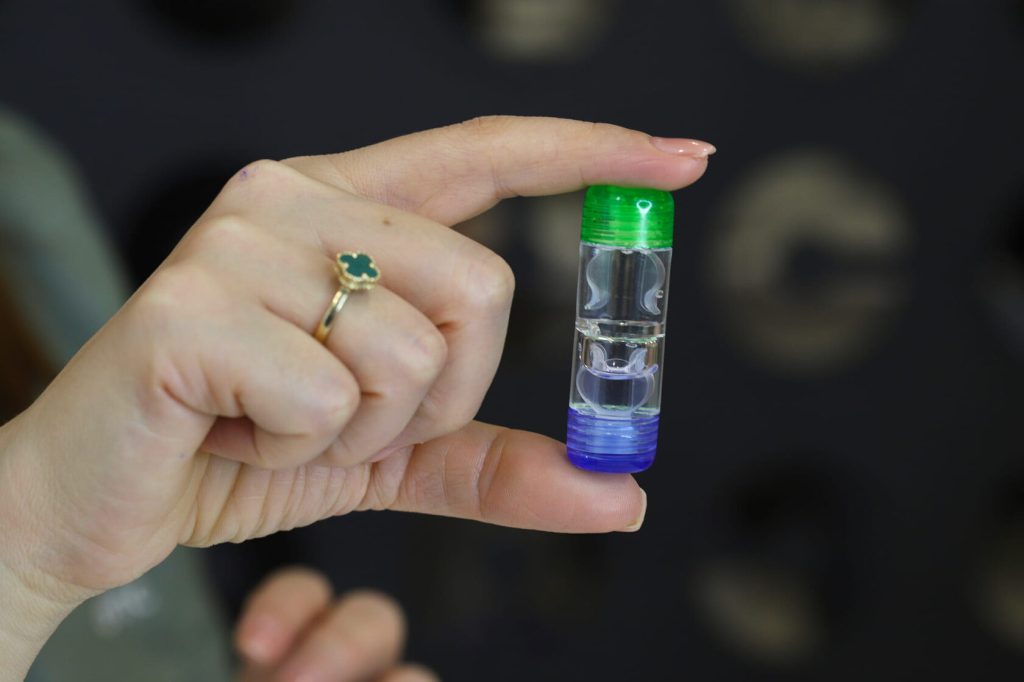
Orthokeratology lenses, or ortho-k lenses, are special rigid gas permeable contact lenses worn overnight. They gently reshape the front surface of your eye (the cornea) while you sleep. This reshaping temporarily corrects your vision, so you can see clearly the next day without glasses or regular contact lenses. The effect lasts for a day or two, and you need to wear the lenses each night to maintain the vision correction.
Orthokeratology isn't magic, but a carefully designed physico-biological effect. Orthokeratology lenses have a special shape: they are «inside-out» compared to regular soft lenses – they have a flat central zone and steeper rings around it. It is this reverse geometry that creates the necessary pressure distribution and hydrodynamics on the corneal surface during sleep.
Here's how it happens in a few steps:
- The lens rests on the eye and holds a thin film of tear fluid between its posterior surface and the cornea.
- The lens works due to its shape: it slightly redistributes tears along the edges and less in the center, thereby creating the desired corneal shape without pressure or damage.
- Epithelial cells (the outer layer of the cornea) are carefully displaced: the central part of the cornea becomes slightly flatter, and the mid-periphery becomes relatively steeper.
- This change in the curvature of the cornea moves the focal point of light closer to the retina, and the person begins to see clearly without additional aids.
Key points that are important to understand:
- The change is superficial and reversible. It's not a «cut» or permanent deformation: if you stop wearing the lenses, the cornea returns to its original shape in a few days.
- The lenses work as long as they are worn regularly (every night) because the effect is reversible.
- The lens materials are specially selected: they are oxygen permeable and compatible with extended overnight wear to minimize risks to the epithelium and ensure a normal metabolic environment for the ocular surface.
- Accurate fit and control are mandatory. If the form is chosen correctly, the effect is predictable and stable; if not, the result may be weaker.
The goal of orthokeratology is to temporarily and uniformly reshape the cornea using the lens shape and tear film as a «tool,» so that a person can achieve good visual comfort during the day without glasses or regular contact lenses.
Main advantages of orthokeratology lenses
- Freedom from optics during the day. This is the most obvious advantage. Exercising, looking through a microscope, swimming, driving – all this can be done without glasses or contact lenses. Your eyes remain free, nothing obstructs or dries them out.
- It suits those who find it inconvenient to wear lenses during the day. Some have dry eyes. Others have allergies to contact lens solution or pollen. Eyes can react sharply during the day. But calmly at night.
- A great solution for active people. Running, fitness, children playing soccer, swimming – regular lenses risk falling out or causing irritation everywhere. With ortho-k lenses, these problems don't exist: during the day, you're free from any eyewear.
- Myopia progression control in children. And here's where the most important part begins. Yes, indeed – numerous studies show that orthokeratology slows down or stops the progression of myopia in children and adolescents. Many parents choose this method precisely for this reason.
- Minimal risks with proper use. Lenses are precisely selected by an ophthalmologist. They are made of highly permeable materials that allow the eye to «breathe.» And since they are only worn at night, the risk of injury and dryness during the day is minimal.
- Reversibility of results. Unlike laser correction, there are no permanent changes here. If you stop wearing the lenses, your vision will return to its original state. This makes the method flexible: if you want to continue, you can; if you don't like it, you don't have to.
- Comfortable adaptation. Most people get used to it in 3-7 nights. After that, you don't feel the lens at all, and mornings become a pleasant surprise – a clear picture without extra effort.
Who are orthokeratology lenses best suited for?
The list of users for whom OK lenses are particularly recommended is indeed extensive, covering both comfort and medical indications.
- Children and adolescents with progressive myopia. This is one of the main categories. In children, the eyeball continues to grow, and myopia often increases every year. Ortho-k lenses help slow down this process due to a special optical profile that affects peripheral focus. This is why orthokeratology has become one of the most effective and well-studied methods of myopia control in children.
- Adults with mild to moderate myopia (approximately up to –8.0 diopters). For those who are tired of glasses and dislike soft lenses, night vision correction offers real freedom. This is especially relevant for intensive work, frequent travel, and significant visual demands at work or school.
- People with astigmatism up to 5 diopters. Modern night lenses are effective at correcting astigmatism. For many, this is an opportunity to get rid of toric lenses or glasses and achieve stable vision during the day without any optical aids.
- Athletes and active users. Soccer, running, gymnastics, water sports – anywhere glasses and daytime contacts become a hindrance. Ortho-k lenses work at night, so during the day nothing gets in the way: fewer risks, less discomfort, more freedom.
- Those who work in dusty, dry, or adverse conditions. Regular lenses can «collect» dust, cause irritation, or dry out. Orthokeratology completely solves the problem: during the day, the surface of the eye remains free from any contact materials.
- Patients who are not ready for or are unsuitable for laser vision correction. Age, thin corneas, contraindications, or simply an unwillingness to have surgery – the reasons vary. Ortho-k lenses are becoming a safe and reversible alternative that provides comparable visual acuity without surgical intervention.
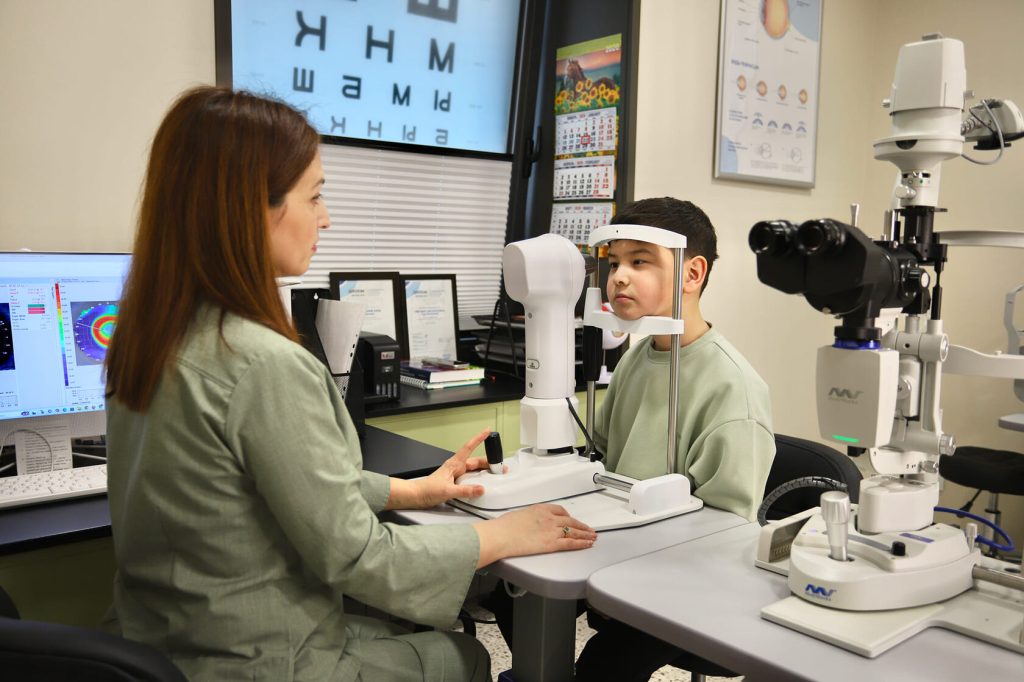
And, of course, it's important to remember that all these groups are just a guideline. The ophthalmologist always makes the final decision after an accurate diagnosis and assessment of the corneal topography.
Orthokeratology lenses are an excellent alternative to glasses, soft contact lenses, and even laser vision correction in certain cases. They provide comfort, freedom, and a high level of myopia control for children. They are suitable for many people but are fitted individually. If you undergo diagnostics with a skilled ophthalmologist, follow the care instructions, and wear the lenses regularly, the method is stable, safe, and provides excellent vision quality.