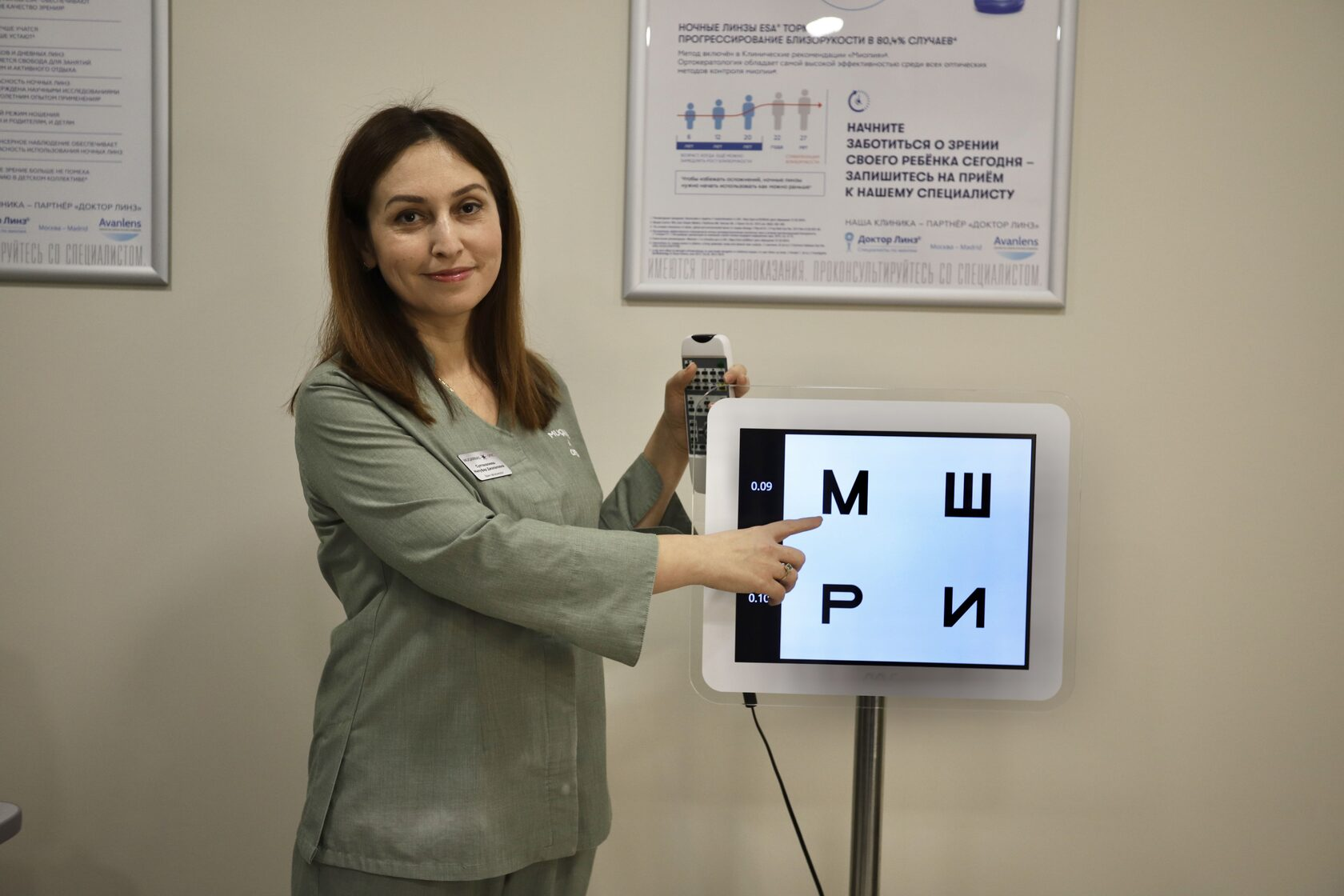




Sometimes you want to solve vision problems without the morning hassle of glasses or putting in lenses and feeling them in your eyes all day. You want to wake up, open your eyes, and see. And this is where orthokeratology comes in. It's not magic, although it sometimes feels like it. It's a technology that allows you to correct your vision... while you sleep. But, like any modern method, it has its own characteristics, nuances, and rules. Especially when it comes to children.
Let's approach this calmly, thoroughly, and as humanly as possible.
What are OK lenses?
To explain without academic jargon, Ortho-K lenses are like nighttime «architects» for your cornea. You put them in before sleep, then rest, and while you're sleeping, the lenses gently and delicately reshape the corneal surface. There's no pressure, no pain – just a controlled change in shape that allows light to focus correctly on your retina.
In the morning, the lenses are removed, and the eye is already «adjusted» for clear vision. The effect lasts all day, sometimes even longer – it depends on individual characteristics. But it's important to remember: this is not permanent. Ortho-K lenses do not «rebuild» the eye radically; they provide a reversible, controllable effect. If you stop wearing them, after a couple of days, the cornea gradually returns to its natural shape, and vision returns to its original level.
Adaptation happens differently. Children usually «get into» the process surprisingly quickly – for them, it's almost like a game: put on lenses at night and see without glasses in the morning. Adults are a bit more cautious, sometimes paying closer attention to their sensations for longer. But the outcome for both is equally inspiring: freedom from glasses and daily lenses, giving a feeling of truly «your own» vision.
Why is orthokeratology so popular with children?
Parents always have two big fears – myopia progression and safety. And this is where ortho-k lenses hit the mark perfectly. The method has a noticeable feature: it can slow down the progression of myopia. It won't grow a new eye, of course, but it can keep the eye's growth within reasonable limits – quite effectively.
Another plus is freedom. Children can run, swim, play, and train without the risk of losing or breaking their glasses. No more daily contact lenses that can cause dryness or discomfort during lessons or training.
Orthokeratology is no less beneficial for adults: for drivers, athletes, people with active work schedules, and those who are simply tired of depending on glasses.
How Orthokeratology Lenses are Chosen: Differences Between Children and Adults
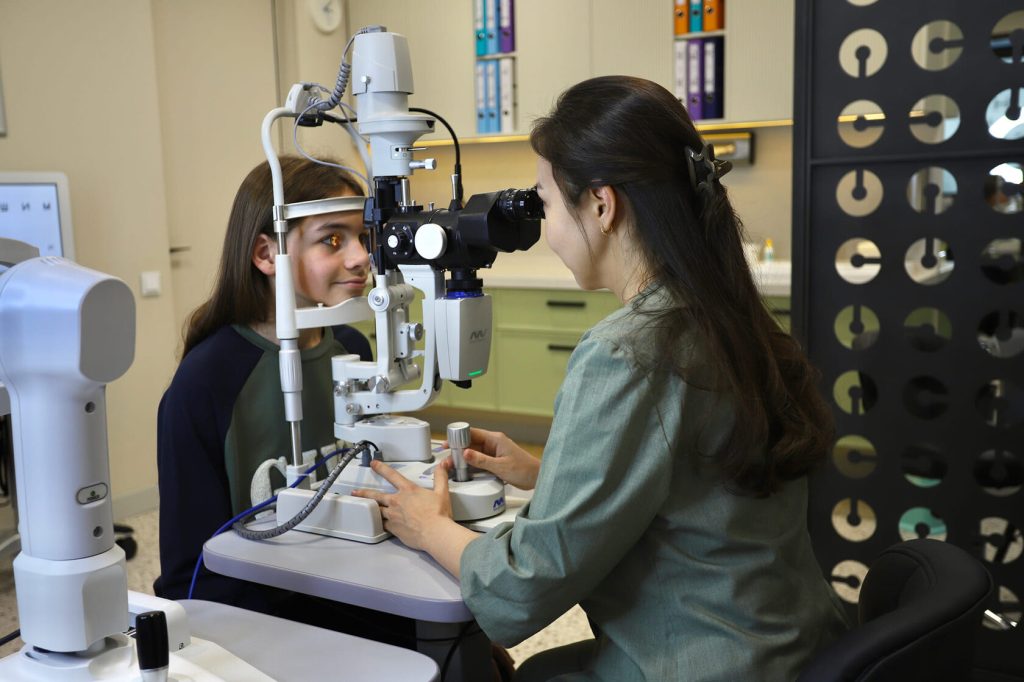
Lens fitting is a careful and unhurried process. The doctor assesses the condition of the cornea, the degree of myopia, the state of the tear film, and performs topography. But there are nuances.
In children, there is a greater consideration of:
- a tendency for myopia to progress
- child's ability to adhere to wearing schedule
- Parental involvement in lens care
- Eye sensitivity and adaptation speed
In adults, it's more important:
- Vision stability
- needs under certain conditions (sports, work, driving)
- the presence of co-occurring dry eye problems
- experience wearing corrective lenses
In both cases, the cornea's topography – a map of its microrelief – plays a key role. It is what shows whether orthokeratology can be safely used.
How is the adaptation going?
Adaptation to orthokeratology lenses typically takes 5–10 days, during which the eyes are essentially «learning» the new optics. Many notice an improvement in vision after the first night, but it may be inconsistent: images might be slightly blurry, and soft halos may appear around bright lights. This is less noticeable during the day but can be more pronounced in the evening, and it's a completely normal transitional phase. The cornea gradually takes on the desired shape, and vision fluctuations will eventually subside.
Sometimes during the first few nights, a slight pressure is felt under the eyelids, a light foreign body sensation. It usually disappears within 10-20 minutes after putting on the lenses, as the eye adjusts. However, if real pain, severe redness, or a sudden decrease in visual acuity appears, it is a warning sign. In such cases, you should not wait, but see a specialist.
Children need help at the start: carefully putting in the lens, making sure it's in correctly, ensuring the case and hands are clean, and the solution is fresh. Sometimes a child might forget or try to «speed up» the process, so parental involvement here is part of the success. After a week or two, children usually become more confident and do everything almost automatically.
Although adults have experience, they can also skip the regimen. But in orthokeratology, discipline is like exercise: if you skip it, the effect weakens. If you skip a couple of nights, the cornea returns to its original shape, and your vision reverts back. Therefore, regularity is the key to a stable result.
Limitations and Risks: Honest and to the Point
Orthokeratology is indeed considered safe, but only under one condition – if a person follows all the doctor's recommendations and does not neglect hygiene. This is a basic principle. Any overnight lenses require clean hands, careful handling, and proper cleaning with solutions. If these conditions are not met, the risk of inflammation, microtrauma, and infections increases. It's not a catastrophe, but it's unpleasant and completely unnecessary.
There are also medical limitations. The method works poorly with mixed astigmatism – it's simply not possible to achieve stable visual quality. Another important group of contraindications includes corneal diseases: keratoconus, dystrophies, and post-traumatic changes. In such cases, the cornea is too vulnerable, and the pressure from the orthokeratology lens can harm it. Moderate to severe dry eye syndrome also becomes a limiting factor: the tear film does not provide adequate protection and comfort, making lens wear potentially painful.
Sometimes it's not about the diagnosis, but about an individual reaction. It happens that a person tries rigid gas permeable (RGP) lenses, goes through the adaptation period, but feels obvious discomfort or an «instinctive» rejection of the rigid material. This is not uncommon, and there's no fault of the patient or the doctor – the cornea simply has its own unique sensitivities and shapes.
And most importantly, it's important to understand that orthokeratology doesn't work on its own. It's a discipline. A routine. The effect only lasts as long as you wear the lenses regularly. Skip a night – your vision will decrease. Skip a few – it will all return to your original vision. If a person understands in advance that they won't follow the schedule or properly care for the lenses, it's better to choose another method of correction to avoid suffering and disappointment.
If you want clear vision without glasses or lenses during the day – yes, it's worth at least trying. The method does not require irreversible steps, is not related to surgery, and is suitable for children and adults. The main thing is proper selection, accuracy, and observation by a specialist.
Orthokeratology – is a way to live more actively and freely. The technology works at night – the comfort remains during the day. That’s why it’s so valued by both parents and adults who are tired of adjusting to their glasses. You can schedule a consultation by leaving a request or by phone: