


Wake up feeling like your eyes are heavy to open? Sit down at the computer, and an hour later you feel stinging and dryness? In the evening, the letters on your phone blur as if you're looking through a fogged-up window? Sound familiar? Our eyes are crying for help, but we continue to ignore the signals until our vision starts to rapidly decline.
The modern person spends 8 to 12 hours daily in front of screens. Office work, social media, late-night TV series – eye muscles are constantly strained, focusing on close objects. Imagine holding your hand in one position all day – by evening, it will go numb and ache. The same thing happens to your eyes. Morning eye exercises (gymnastics) are not a fashionable fad, but actual prevention against nearsightedness, dry eye syndrome, and premature aging of the visual system.
Why in the morning?
While you were sleeping, your eyes rested for 6-8 hours without screens or bright light. This is the ideal state to activate protective mechanisms for the entire day. Morning exercises improve blood circulation in the retinal vessels, saturate tissues with oxygen, and «turn on» the natural corneal moisturizing system. If you do exercises in the evening, when your eyes are already tired, the effect will be many times weaker – it's like trying to charge a completely dead battery.
Just 5 minutes of exercise after waking up can reduce the risk of myopia progression by 30–40%, especially among people who work at a computer. The reason is that these exercises train the ciliary muscle, which is responsible for focusing the eyes at different distances. When this muscle weakens from repetitive strain, accommodation spasm develops—a precursor to actual myopia.
5-Minute Routine: Clear Instructions
Exercise 1. «Horizons» (1 minute)
Approach the window and focus your gaze on the nearest object – for example, a flower on the windowsill or a sticker on the glass. Hold your focus for 5 seconds. Then, shift your gaze to the farthest object outside the window: a tree, building, or cloud, and hold it for another 5 seconds. Repeat the exercise 6-8 times. This change in focus helps relieve the tension in the ciliary muscle that occurs during prolonged screen use.
Exercise 2. «Figure Eight» (1 minute)
Imagine a large horizontal number 8, the infinity symbol, in front of you. Slowly move your gaze along its outline without turning your head. Make 5 circles clockwise, then another 5 in the opposite direction. The movements should be smooth and controlled. This exercise helps to strengthen the eye muscles and improve eye coordination.
Exercise 3. «Clock» (1 minute)
Imagine a clock face in front of you. Look at each number sequentially: 12, 3, 6, 9, returning to the center after each point. Then, make it more complex: 12-1-2-3 and so on, in a circle. Keep your head still; only your eyes move. This exercise works all six eye muscles and prevents them from atrophying.
Exercise 4. «Nose Writing» (1 minute)
Close your eyes and imagine that the tip of your nose is a pencil. «Write» your name or the alphabet in the air by moving your head. It sounds strange, but this exercise relaxes the neck muscles, improving blood supply to the eyes. Compressed cervical vertebrae are a common cause of impaired blood supply to the optic nerve.
Exercise 5. «Palming» (1 minute)
Vigorously rub your palms together until they feel warm. Close your eyes and cover them with your warm palms, without applying pressure. Your fingers should interlace on your forehead, and the heels of your palms should rest on your cheekbones. Sit like this for a minute, breathing deeply and steadily. This exercise completes the routine, giving your eyes complete rest in darkness and warmth.
What to expect from regular practice?
You'll notice the first changes after 2-3 weeks of daily practice. The feeling of «sand» in your eyes by the end of the workday will disappear, it will be easier to focus on small text, and your head will ache less from eye strain. After 2-3 months, ophthalmologists often record an improvement in visual acuity of 0.25-0.5 diopters – especially in people with early-stage myopia.
Important clarification: charging will not replace treatment for serious eye diseases. If you have been diagnosed with glaucoma, cataracts, retinal detachment, or inflammatory processes, be sure to consult an ophthalmologist before starting exercises. Some eye movements may be contraindicated in such conditions.
Additional tips for eye health
- The 20-20-20 rule. Every 20 minutes of screen time, look at an object 20 feet away for 20 seconds. This simple rule prevents eye strain.
- Blink consciously. When using a computer, the blinking rate drops from 18 to 4 times per minute, leading to corneal dryness. Every 10 minutes, do 10 rapid blinks.
- Adjust the lighting. The monitor should not be the only light source in the room. The contrast between the bright screen and the dark room strains the eyes.
- Maintain a distance. The distance from your eyes to the monitor should be 50-70 cm, and to your phone - at least 30 cm.
- Drink water. Dehydration instantly affects eye moisture. Drink at least 1.5-2 liters of clean water per day.
When is exercise not enough?
Morning exercises are a powerful tool for prevention, but they are not omnipotent. If your vision continues to decline despite regular exercises, or if you are tired of constantly wearing glasses and contact lenses, it is worth considering modern vision correction methods.
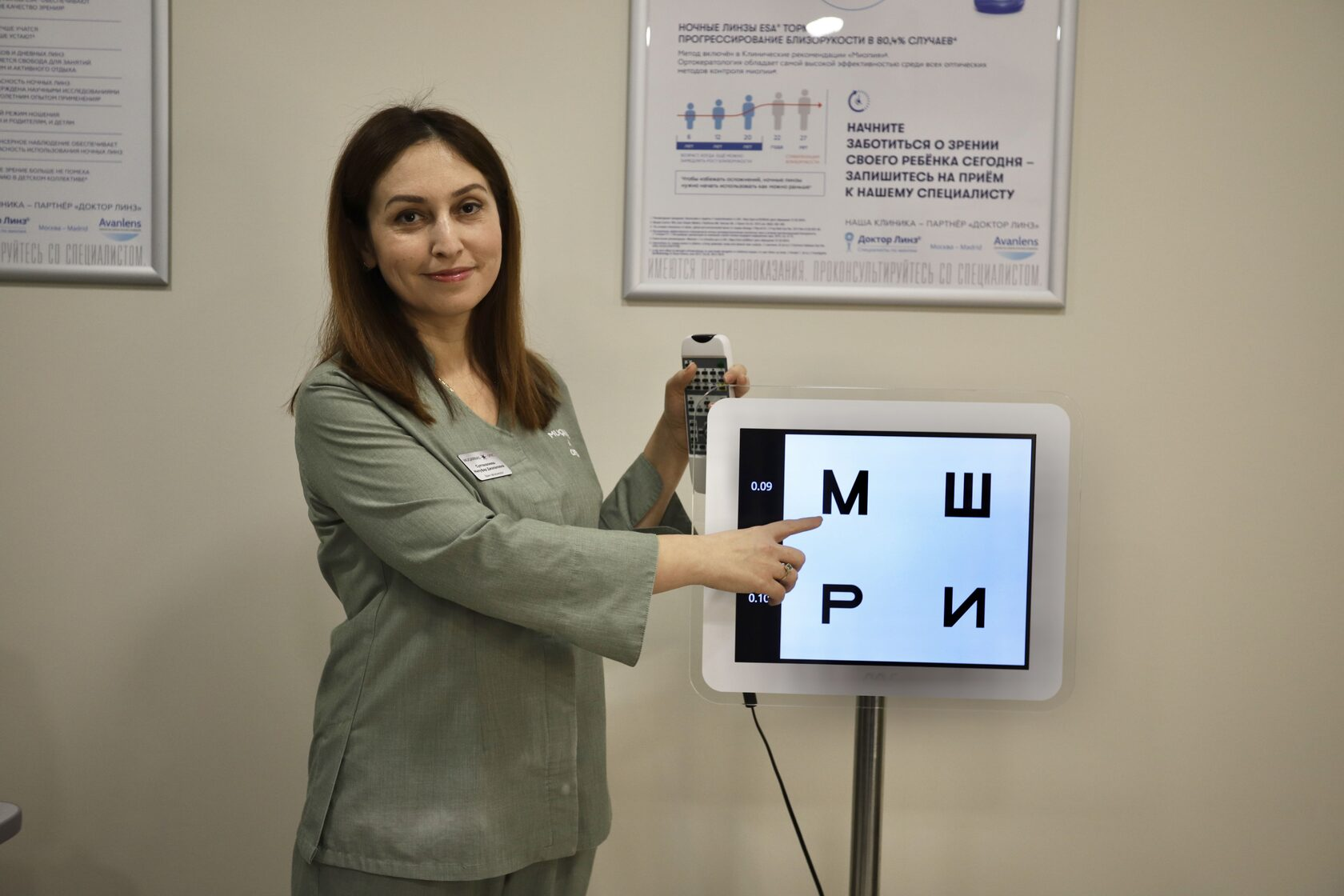
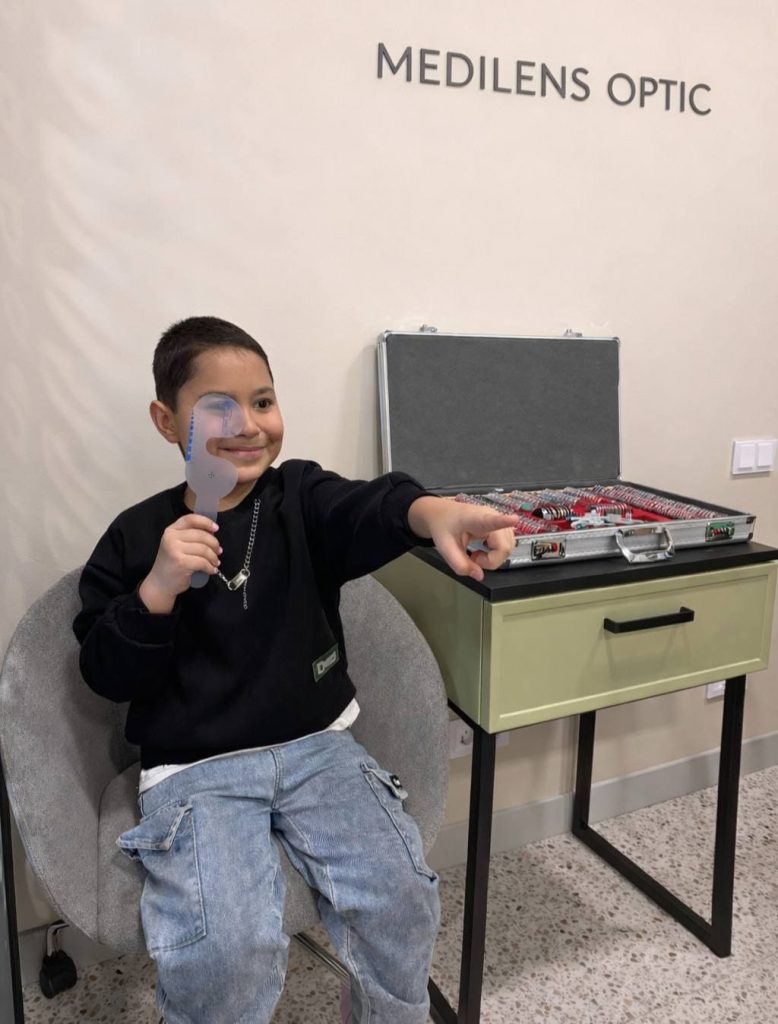
At MediLens Optic clinic in Tashkent, experienced ophthalmologists offer an innovative solution – orthokeratology lenses. These are special lenses worn only during sleep that gently correct the shape of the cornea. In the morning, you remove them and see the world clearly all day, without glasses, daytime lenses, or surgery. The method is absolutely safe, reversible, and suitable even for children with progressive myopia.
Clinic specialists will conduct a comprehensive eye examination, select individual lens parameters, and teach you how to use them correctly. You can schedule a consultation by phone. +998 (77) 123-80-80 or by leaving a request on the website. Take care of your eyes today, so that tomorrow you can see the world in all its colors – without limitations and compromises.